


Table of Contents
Completing Invisalign is a meaningful accomplishment. But the moment the final aligner comes out, many patients are surprised to learn that the work is not entirely finished. After Invisalign treatment, the teeth are in their corrected positions—but the bone and connective tissue that anchor those teeth in place are still actively adapting to their new location. Understanding this biological process is what makes the difference between a result that holds for life and one that quietly shifts back over time.
Key Takeaways
-
Bone remodeling around the tooth roots continues for months after the final aligner is removed, creating a biologically unstable period when relapse is most likely.
-
Retainers hold teeth in position while the remodeling completes; skipping them during this window allows measurable drift.
-
Full-time retainer wear is typically required for several months after Invisalign treatment, followed by a transition to nightly wear.
-
The gums, bite, and soft tissue may feel or look slightly different for a few weeks after treatment ends as they adjust to the absence of the aligner pressure.
-
Patients who grind their teeth need to address that habit specifically after Invisalign, as bruxism can shift corrected teeth and damage the retainer.
The Biology Behind What Happens After Treatment Ends
Teeth move during Invisalign treatment because bone responds to sustained mechanical force. On the compression side of a moving tooth, osteoclasts resorb bone. On the tension side, osteoblasts lay down new bone. This cycle repeats with each new aligner tray, incrementally repositioning each tooth over the course of treatment.
When the final aligner is removed, the bone that has been laid down around the newly positioned roots has not yet fully mineralized or matured. The periodontal ligament—the fiber network attaching root to bone—is still reorganizing its architecture around the new tooth position. During this consolidation phase, the tissues retain a mechanical memory of where the teeth used to be, and any reduction in retention pressure creates conditions for drift back toward the original positions. This is called relapse, and it is not a treatment failure. It is a predictable biological response to the removal of sustained force.
Why Retainers After Invisalign Are Not Optional
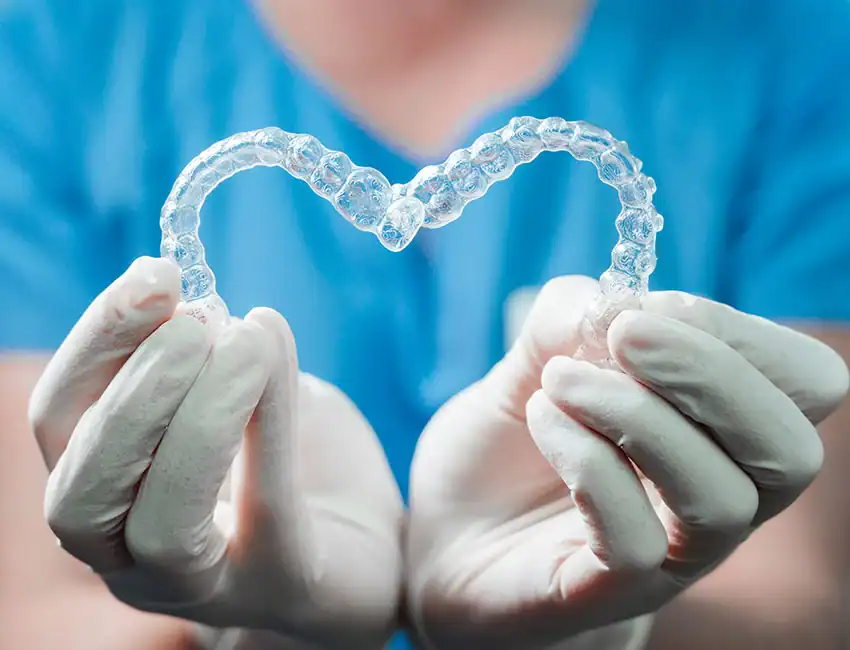
A retainer maintains the position of the teeth while bone consolidation completes, and the periodontal ligament fibers reorient to the new position. Most providers recommend 20 to 22 hours of daily retainer wear—the same expectation as the aligners—for at least the first three to six months after Invisalign treatment. After that consolidation window, nightly wear is generally sufficient to prevent relapse indefinitely.
The misconception that retainer wear can taper off or stop after enough time has passed is one of the most common sources of post-treatment disappointment. Teeth do not reach a permanently stable state without mechanical retention. Even patients who completed orthodontic treatment years ago and have since stopped wearing their retainer typically show gradual drift when examined. Nightly retainer wear for the rest of the patient’s life is the expectation, and it is a low-effort one once the habit is established.
What Changes in the Mouth Immediately After Treatment
The gum tissue that was in continuous contact with the aligner plastic throughout treatment sometimes shows minor irritation or textural changes in the first few weeks after Invisalign treatment ends. This typically resolves as the tissue adjusts to normal exposure and the compression of the aligner is removed.
The bite often feels subtly different as well. Teeth that have been repositioned are now meeting opposing teeth at different angles and contact points, and the jaw muscles adapt to this new relationship over a period of weeks. Most patients describe their bite as feeling settled and natural within a month of finishing treatment. If the bite feels significantly off—particularly if there is persistent discomfort when chewing—mentioning it at the retainer follow-up allows the provider to assess whether any minor refinement is needed.
Monitoring and Long-Term Care After Invisalign Treatment
Ongoing dental visits after Invisalign treatment serve two purposes beyond routine hygiene: monitoring retainer fit and tracking long-term tooth stability. Retainers that no longer seat fully indicate that some drift has occurred, and catching that early allows the provider to address it before a more significant correction is required.
Patients with bruxism need a specific conversation with their provider about how to manage grinding alongside retainer wear. Night grinding generates forces that can shift corrected teeth and crack or distort the retainer itself. A custom occlusal guard worn over or alongside the retainer addresses the mechanical stress of grinding while protecting the alignment result.
Frequently Asked Questions
How long do I really need to wear my retainer after Invisalign?
Indefinitely, at a nightly maintenance level. The first several months after Invisalign treatment require full-time wear to protect against relapse during the bone consolidation period. After that, nightly wear prevents the gradual drift that would otherwise occur. Teeth never reach a point where they hold their position permanently without any retention, and patients who discover this after stopping retainer wear often need new retainers or additional treatment to correct what has shifted.
What happens to the retainer as my teeth age?
Clear retainers are durable but not permanent. They can develop microfractures, discoloration, and reduced clarity over time, and they need to be replaced periodically—typically every one to three years, depending on wear patterns. Fixed wire retainers bonded to the back of the lower front teeth can last many years but require consistent cleaning to prevent calculus buildup at the bonding points. Your provider will advise on monitoring and replacement based on the type of retainer you have.
The Work Is Done; the Result Needs Protecting
After Invisalign treatment, the aligners are finished, but the responsibility for the result continues. The biology of tooth retention is predictable and manageable—consistent retainer wear during the consolidation phase and nightly wear afterward are all it takes to keep the corrected position stable for decades. Patients who understand this in advance tend to follow through consistently, and consistent follow-through is what produces a result that holds.
If you want to learn more about Invisalign, visit our Invisalign in Camarillo page or schedule a consultation.