

Dental implants are one of the most durable tooth replacement options available—but durability is not the same as maintenance-free. Knowing how to care for dental implants properly is what separates an implant that lasts decades from one that develops complications and requires intervention years earlier than it should. The good news is that implant care is not complicated, and most of it overlaps with habits you should already have.
Key Takeaways
-
Dental implants cannot get cavities, but the gum and bone tissue surrounding them can still develop disease if not properly maintained.
-
Brushing twice a day, flossing daily, and using low-abrasive toothpaste are the cornerstones of effective implant care at home.
-
Peri-implantitis—an inflammatory condition similar to gum disease—is the most common cause of implant failure and is largely preventable with consistent maintenance.
-
Professional cleanings at the recommended interval allow your dental team to monitor implant health and address early signs of inflammation before they escalate.
-
Habits like smoking, grinding teeth, and chewing on hard objects significantly increase the risk of implant complications over time.
-
Why Implant Maintenance Matters More Than Most Patients Realize
Why Implant Maintenance Matters More Than Most Patients Realize
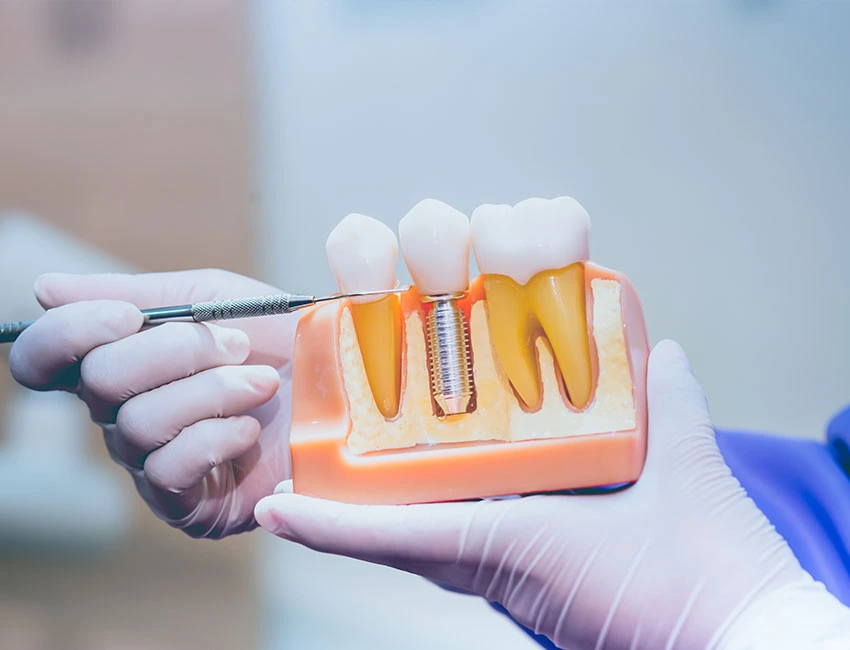
A common misconception about dental implants is that because they can’t decay, they don’t need the same level of care as natural teeth. The implant post itself is titanium and immune to cavities—but the tissue surrounding it is not immune to disease. Gum tissue and bone that are not properly maintained can develop peri-implantitis, an inflammatory condition caused by bacterial buildup around the implant.
Peri-implantitis progresses similarly to periodontitis, eroding the bone that anchors the implant in place. In advanced cases, it can lead to implant failure. Research shows it is one of the most common long-term complications following implant placement—and one of the most preventable. Consistent home care and professional maintenance are what keep that risk low.
What Does a Good Daily Routine Look Like?
To care for dental implants effectively at home, a few specific habits make the biggest difference. Here is what a solid daily routine includes:
- Brush twice daily: use a soft-bristled toothbrush—manual or electric—and a low-abrasive toothpaste; abrasive products can scratch the implant crown surface over time and make it easier for plaque to adhere
- Floss once a day: floss around the implant just as you would a natural tooth, including slightly below the gumline; implant-specific floss, dental tape, or a floss threader makes this easier if the implant is tight against neighboring teeth
- Use a water flosser: a water flosser is particularly effective at flushing bacteria from around implant components and below the gumline, and many implant patients find it easier to use consistently than traditional floss
- Rinse with an antibacterial mouthwash: a non-alcoholic antibacterial rinse used once daily reduces the bacterial load around the implant without drying out the tissue, the way alcohol-based rinses can
- Avoid hard objects: chewing on ice, hard candy, pen caps, or fingernails puts excessive stress on the implant crown and can cause chipping or micro-fractures that compromise the restoration over time
Consistency matters more than perfection. Even small improvements to your daily routine—done reliably—have a compounding effect on implant health over the years.
How Often Do You Need Professional Maintenance?
Professional cleanings are a non-negotiable part of how to care for dental implants for the long term. Your dental team uses specialized instruments to clean around implant components without scratching the titanium surface—a task that requires different tools than those used on natural teeth.
Most implant patients are recommended to come in every three to six months, depending on their overall oral health and risk factors. At these visits, your provider checks the stability of the implant, assesses the surrounding gum and bone tissue, and looks for early signs of peri-implantitis. Catching inflammation at this stage—before it has caused bone loss—means treatment remains straightforward.
Periodic X-rays allow the team to monitor bone levels around the implant over time. Small changes in bone height that are invisible clinically show up clearly on imaging and can guide early intervention when needed.
What Habits and Lifestyle Factors Affect Implant Longevity?
Certain habits outside of oral hygiene have a significant impact on how long implants remain healthy. Smoking is the most consequential. It restricts blood flow to the gum tissue, impairs healing, and dramatically increases the risk of peri-implantitis and implant failure. Patients who smoke should discuss this openly with their dental provider and prioritize cessation.
Bruxism—teeth grinding or clenching—places excessive force on implant components and can loosen or fracture the crown over time. If you grind your teeth, a custom nightguard protects both your implant and your natural teeth during sleep. Maintaining stable blood sugar if you have diabetes also contributes to healthier tissue around the implant and better long-term outcomes.
An Implant That Lasts Starts With Daily Habits
The path to caring for dental implants over the long term is straightforward: brush, floss, avoid habits that stress the restoration, and show up for professional maintenance on schedule. These steps are what transform a well-placed implant into one that functions beautifully for decades.
If you want to learn more about dental implants, visit our Dental Implants in Camarillo page or schedule a consultation.