

Do you feel hesitant to show your gums when you smile? It’s a more common fear than you think. A gummy smile affects millions of people and can make even the healthiest teeth look disproportionate. The good news is that modern cosmetic dentistry offers several effective solutions to create a more balanced, confident smile. Whether your gummy smile results from excess gum tissue, a short upper lip, or the way your teeth erupted, there’s likely a gummy smile treatment option that can help you achieve the look you’ve been hoping for.
Key Takeaways
-
A gummy smile occurs when more than three to four millimeters of gum tissue shows above the teeth during a full smile, and it can result from several different causes.
-
Gum contouring, also called a gingivectomy, removes excess gum tissue to reveal more of the tooth surface and create better proportions.
-
Lip repositioning surgery limits how high your upper lip rises when you smile, reducing the amount of gum tissue that shows.
-
Botox injections offer a temporary, non-surgical option that relaxes the muscles controlling upper lip movement for three to four months.
-
The best treatment for your gummy smile depends on the underlying cause, which your dentist can determine through a comprehensive evaluation.
What Causes a Gummy Smile?
Understanding why you have a gummy smile is the first step toward finding the right solution. A gummy smile can develop from several different factors, and sometimes more than one cause contributes to the appearance. Excess gum tissue is one of the most common culprits, where the gums simply cover more of the tooth surface than they should. This can happen when teeth don’t fully erupt through the gums during development, leaving them partially covered even in adulthood.
The upper lip also plays a significant role in how much gum shows when you smile. A hyperactive upper lip rises higher than average during smiling, exposing more gum tissue even when gum levels are normal. Similarly, a naturally short upper lip may not provide enough coverage. Skeletal factors matter too. When the upper jaw grows longer than normal, it positions the gums and teeth lower in relation to the rest of the face, creating a gummy appearance.
What Cosmetic Treatments Can Fix a Gummy Smile?
Cosmetic dentistry has developed several approaches to address a gummy smile, each targeting different underlying causes. Your dentist will recommend the most appropriate option based on what’s creating your gummy smile and how significant the correction needs to be.
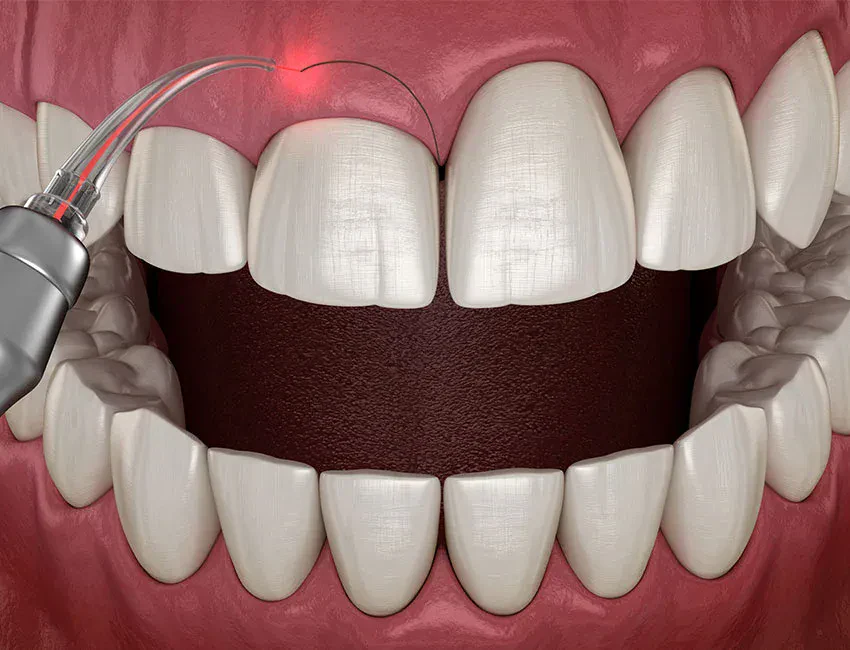
- Gum contouring reshapes your gumline by removing excess tissue with a laser or scalpel, revealing more tooth surface and creating a more proportionate smile in a single office visit.
- Crown lengthening goes deeper than gum contouring by also reshaping the bone that supports your teeth, providing more dramatic and permanent results for severe cases.
- Lip repositioning surgery restricts the elevation of your upper lip by modifying the tissue connecting your lip to your gums, reducing gum display without changing your gum tissue itself.
- Botox injections temporarily weaken the muscles that pull your upper lip upward, offering a quick, non-invasive solution that lasts approximately three to four months before requiring retreatment.
- Orthodontic treatment can reposition teeth that sit too low on the jaw, and in some cases, orthognathic surgery may be recommended to address significant skeletal issues contributing to a gummy smile.
How Do I Know Which Treatment Is Right for Me?
Choosing the right treatment for your gummy smile starts with a thorough evaluation by a qualified cosmetic dentist or periodontist. During your consultation, your dentist will measure how much gum tissue shows when you smile and examine the factors contributing to the appearance. They’ll assess your gum tissue thickness, tooth proportions, lip movement, and bone structure to determine the root cause.
If excess gum tissue is the primary issue, gum contouring often provides excellent results with minimal downtime. When a hyperactive lip causes most of the gum display, Botox might be a good starting point to see how you feel about the change before committing to surgery. For complex cases involving multiple factors, your dentist may recommend a combination approach. Be sure to discuss your goals, budget, and tolerance for recovery time so you can make an informed decision together.
What Should I Expect During Recovery?
Recovery experiences vary depending on which treatment you choose for your gummy smile. Gum contouring typically involves mild discomfort and sensitivity for a few days, with most patients returning to normal activities within a day or two. You’ll need to eat soft foods and avoid brushing the treated area directly while your gums heal over the following week or two.
Lip repositioning surgery requires a longer recovery period of one to two weeks, during which you may experience swelling and need to follow a soft food diet. Crown lengthening has a similar timeline since it involves bone modification. Botox requires virtually no downtime, though you should avoid rubbing the injection sites for several hours. Your dentist will provide specific aftercare instructions and schedule follow-up appointments to monitor your healing and results.
Achieving Your Ideal Smile
A gummy smile doesn’t have to hold you back from smiling with confidence. With today’s cosmetic dentistry and gummy smile treatment options, you can achieve a more balanced, proportionate smile that makes you feel great about your appearance. Whether you need a simple gum contouring procedure or a more comprehensive treatment plan, the first step is scheduling a consultation with a cosmetic dentist who can evaluate your unique situation. Together, you can explore the options and find the solution that helps you smile freely and confidently.
If you want to learn more about gummy smile treatment, visit our Gummy Smile Treatment in Camarillo page or schedule a consultation.